Good camp food rarely comes from a clever recipe. It comes from a plan made at home, a kitchen that is packed the same way every time, and a handful of habits that keep food cold, cooking simple and the campsite clean. This guide pulls all of that together. It is the long version of what we wish someone had told us before our first trip with a cooler, a two-burner stove and a vague idea of “we’ll figure out dinner when we get there.”
Whether you are planning a single night at a drive-in campground or a week at a lake with friends, the approach is the same. Decide the menu before you shop. Prep what you can in your own kitchen. Pack in bins that match how you cook. Keep the cooler cold and closed. Clean up promptly, and store food the way local rules require. The rest — the smell of coffee in cool air, dinner eaten by firelight — takes care of itself.
Start with the trip length
The length of your trip shapes almost every food decision, because it determines how long your cooler has to last. A useful way to think about it is in three bands.
One night
An overnight is the easiest to plan: one dinner, one breakfast, and perhaps a lunch on the way home. Keep it minimal. A make-ahead dinner that only needs reheating, a no-cook or quick breakfast, and plenty of snacks. You can often manage with a small cooler and a single burner. This is the perfect trip for testing a new stove or a new recipe before a longer outing.
Two to three nights
A long weekend is where planning starts to earn its keep. Perishables need to be eaten in the right order — raw meat on the first or second night, while the cooler is at its coldest — and the last day should lean on shelf-stable food. Ingredients should overlap between meals so you are not carrying half-used packages home. Our 3-day meal plan and shopping list is built exactly this way, with a table you can print and take to the store.
Four nights or more
Longer trips need a resupply plan or a bigger reliance on pantry food: grains, pasta, canned beans and fish, tortillas, hard cheese, dried fruit, nuts and shelf-stable sauces. Plan to buy ice every day or two, and keep a “use first” list on the cooler lid so nothing gets buried. Many experienced campers bring two coolers — one for drinks that gets opened constantly, and one for food that stays shut.
Build a menu that shares ingredients
The best camp menus look repetitive on paper and feel generous in practice. The trick is to choose a small set of versatile ingredients and use each one at least twice. Tortillas become breakfast burritos, lunch wraps and dinner quesadillas. A bag of peppers and onions goes into foil packets on Saturday and a skillet hash on Sunday. A block of cheese covers chili, sandwiches and snacks.
This approach shrinks the shopping list, frees space in the cooler and cuts down on garbage. It also makes meals faster to assemble, because you are working with familiar components instead of a new set of ingredients for every dish. Write the menu as a simple grid — days across the top, meals down the side — and tape a copy inside your food bin.
For each dinner, note the heat source and a backup. “Foil packets — coals; backup: skillet on stove.” That one line removes stress if the wood is wet, the wind picks up or a fire restriction goes into effect. We explore this in more depth in stove or campfire?
Set up a kitchen that works
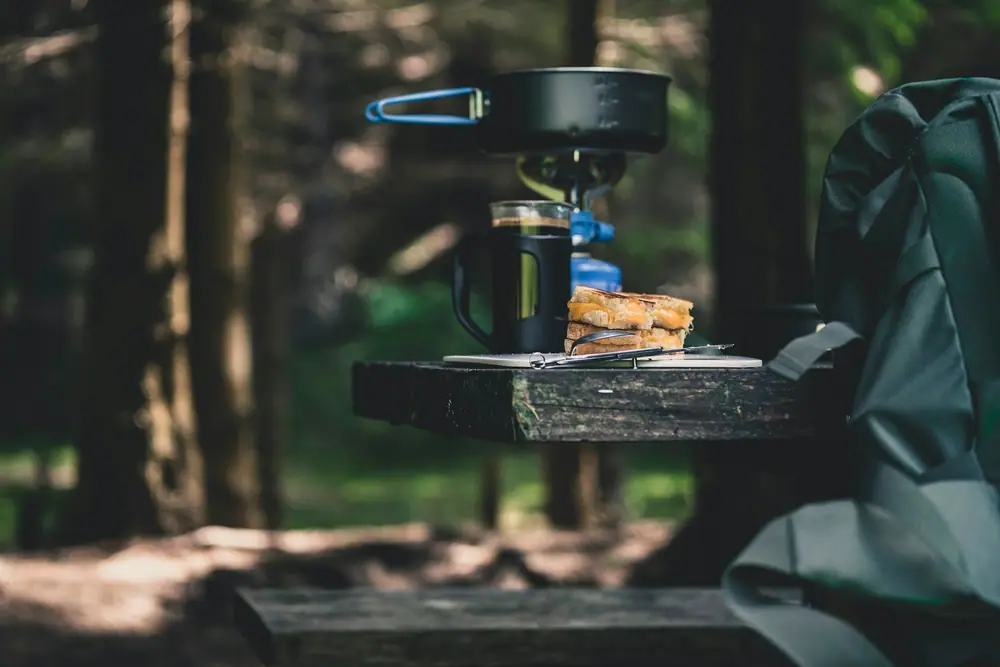
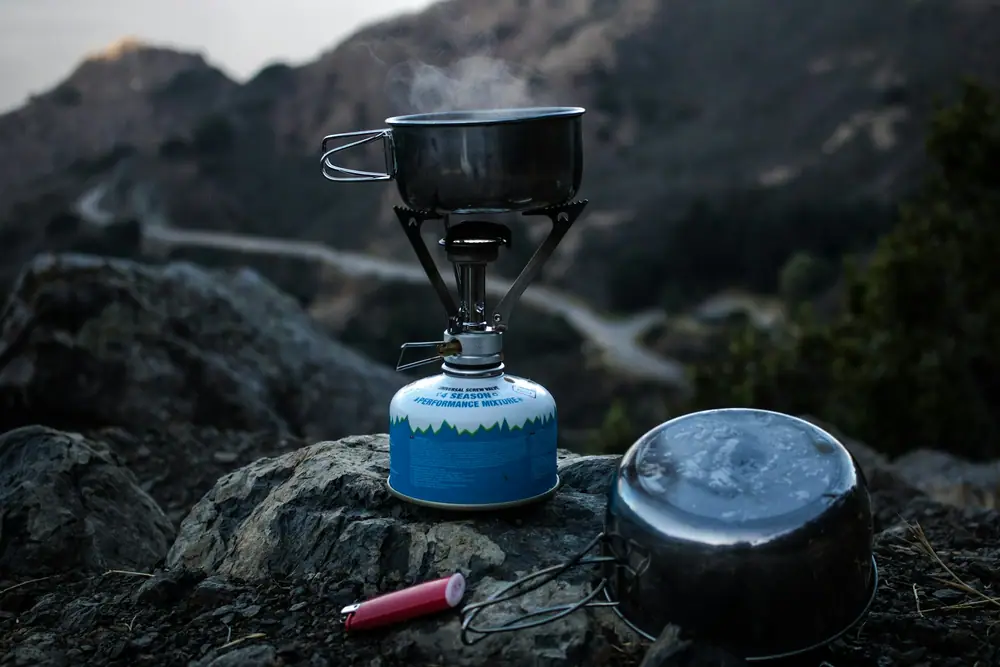
A camp kitchen is simply a stove, a surface and a system. The system is what most people are missing. We pack the kitchen into two lidded bins: a cook bin with the stove, fuel, cookware, knives and utensils, and a clean bin with basins, soap, towels and garbage bags. Food travels separately in a dry-food bin and the cooler.
At camp, lay the kitchen out as a line on the picnic table: cooler in the shade at one end, prep space and stove in the middle, wash station at the far end. Food flows from cold storage to prep to heat to plates, and dirty dishes flow the other way to the basins. Nobody bumps into the cook, and nothing gets set down in the wrong place.
The full list — including the small items people forget, such as a can opener, a second lighter, clothespins for bag clips and a headlamp for cooking after dark — lives on our camp kitchen gear checklist. Print it, tape it inside the bin lid, and restock against it when you get home so the next trip starts complete.
Keep the cooler cold
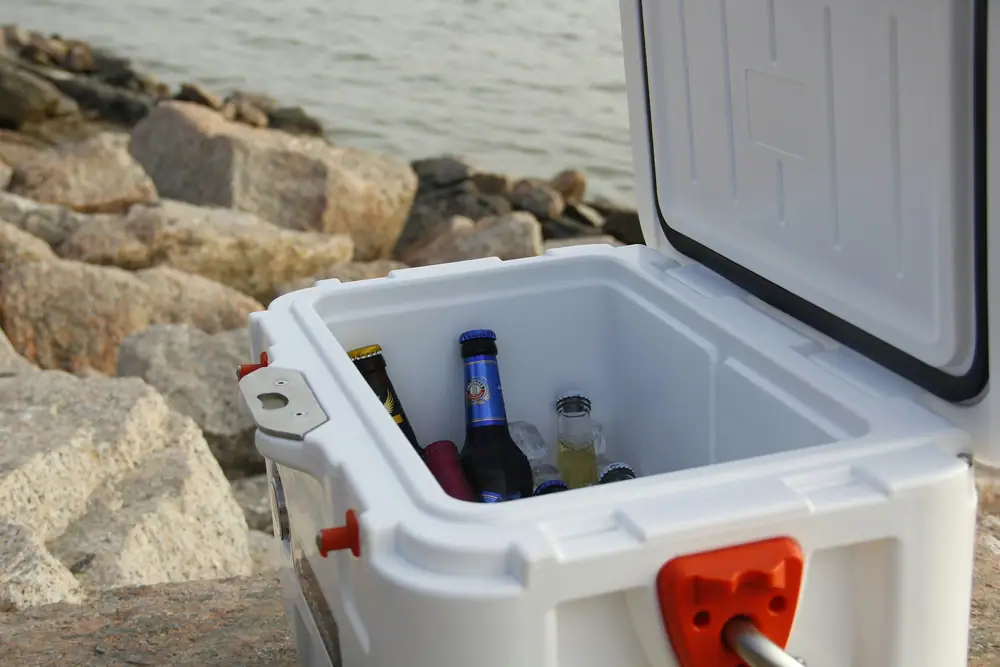
The cooler is the most important food-safety tool you bring. Perishable food should stay at 4°C (40°F) or below; between 4°C and 60°C (40–140°F), bacteria multiply quickly, and perishables left in that range for more than two hours (one hour above 32°C / 90°F) should be thrown away. Those numbers drive every cooler habit worth having.
Pre-chill the cooler the night before. Freeze what you can — water jugs, marinated meat, the first-night chili — so it doubles as ice. Pack in layers: block ice and frozen food on the bottom, sealed raw meat in the middle, and vegetables, cheese and first-day food on top. Fill gaps with cube ice. At camp, keep it in the shade, open it with a plan, and put a small thermometer inside so you are checking facts rather than guessing. The cooler packing and food safety guide has the full layer table and a keep-or-toss chart for when the ice runs low.
Do the work at home
An hour in your own kitchen saves several at camp. Chop onions and peppers and bag them by meal. Par-boil potatoes for foil packets. Crack eggs into a sealed bottle. Mix pancake and cornbread dry ingredients in labelled jars. Cook and freeze the first night’s dinner. Every step done at home uses your tap water instead of carried water, and leaves peels and packaging in your own compost and recycling rather than in a campsite garbage bag that draws animals.
Label everything with the meal and the day. It sounds fussy until you are digging through a cooler by headlamp. Our make-ahead prep checklist lists what is worth prepping and what is better left fresh.
Cook simply: one pot and foil
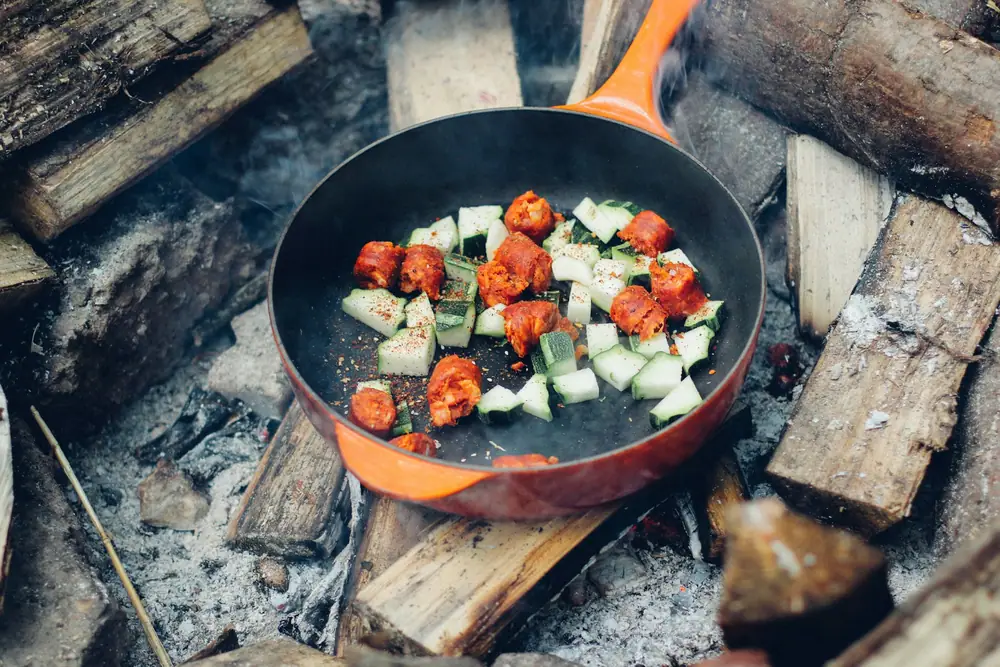
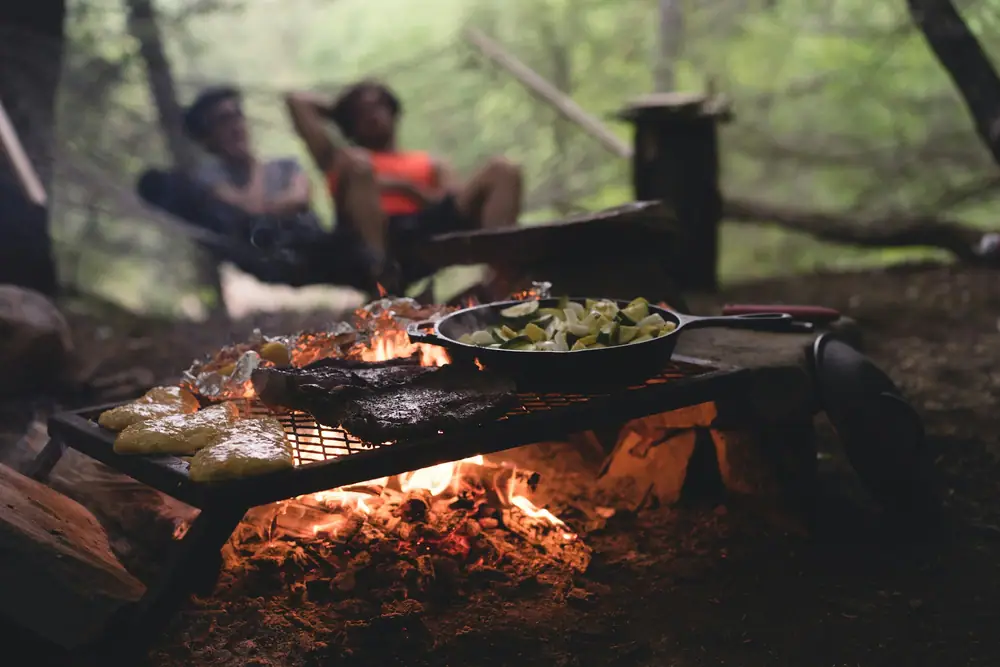
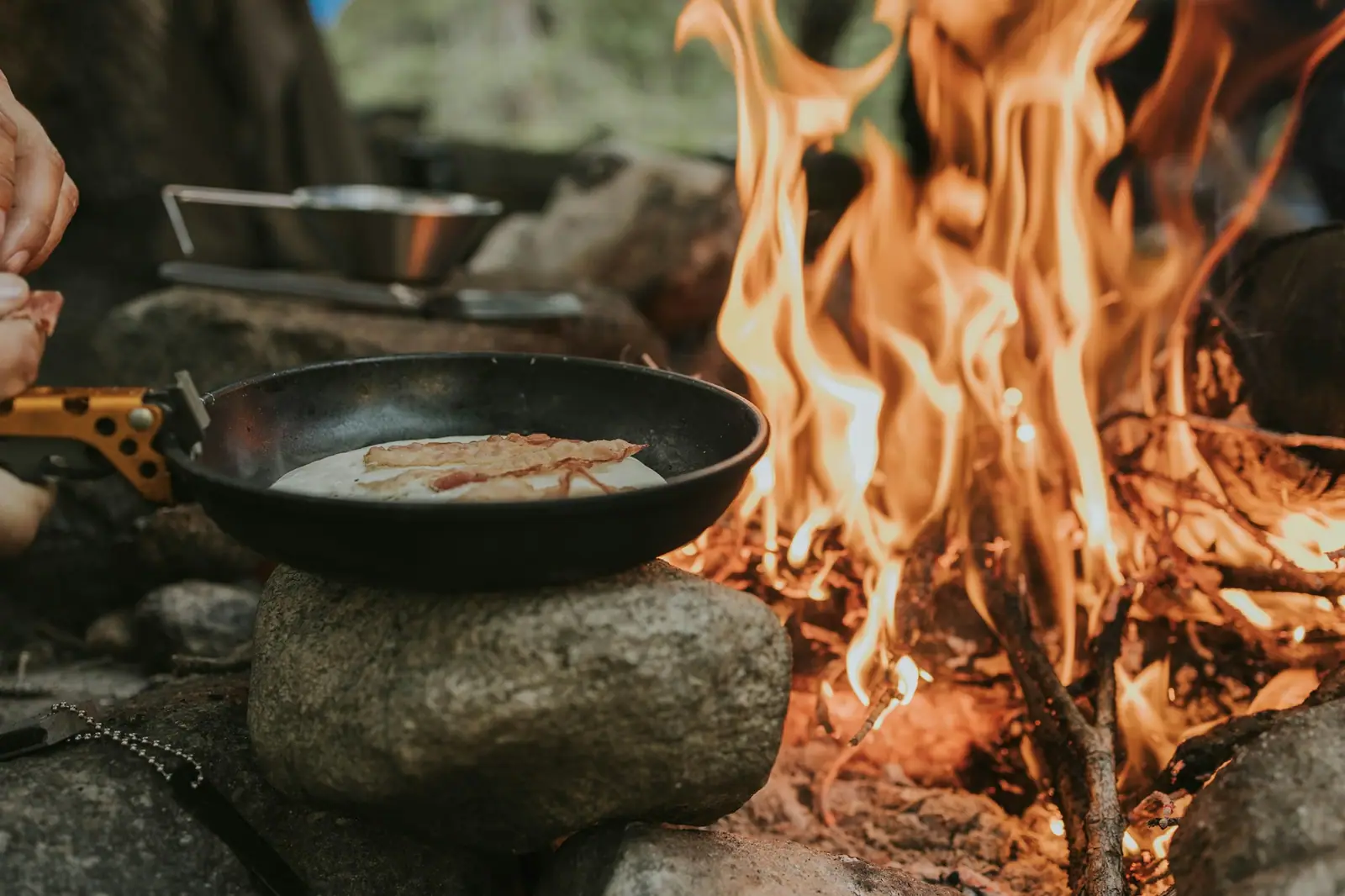
The two most useful techniques in camp cooking are the one-pot meal and the foil packet. One-pot meals — chili, stew, curry, pasta cooked in its sauce — build flavour in a single vessel and leave one thing to wash. Foil packets turn each portion into a small sealed steam oven that sits on the coals while everyone gathers around the fire.
Both are forgiving, both scale easily from two people to a dozen, and both adapt to whatever is in the cooler. Start with our one-pot campfire chili and the foil-packet method, then improvise from there. Whatever you cook, bring a thermometer: ground meat should reach 71°C (160°F) and poultry 74°C (165°F).
Clean up before dark
Cleanup is part of the meal. Start heating dishwater while you eat, and set up three basins — wash, rinse, sanitize — at the far end of the table. Scrape plates into the garbage bag before washing, strain dishwater, and dispose of it the way the campground asks, or well away from lakes and streams in the backcountry. Never burn food scraps in the fire; half-burned food is one of the most common reasons animals keep returning to a site. The cleanup and water station checklist covers water quantities, boiling guidance and the full station kit.
Store food like the bears are watching
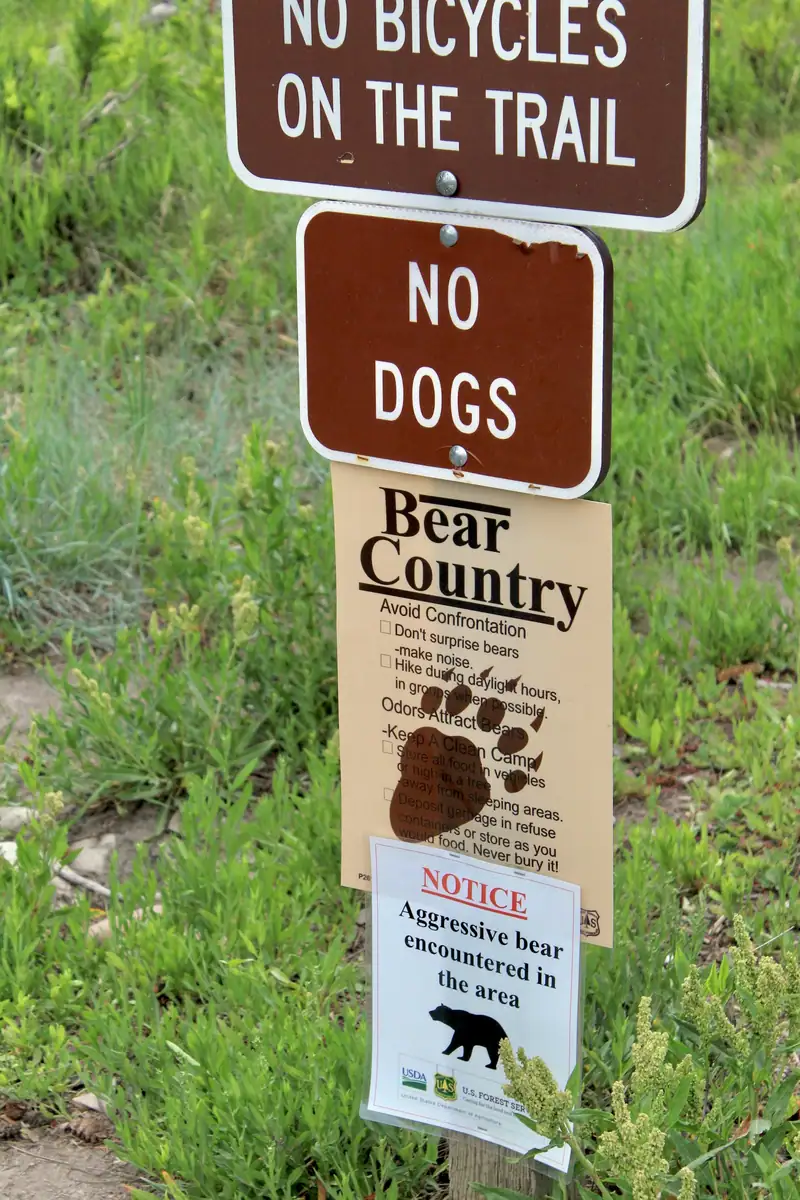
In bear country, food storage rules are specific and mandatory, and they vary between national parks, provincial parks and other public lands. Some require canisters, some provide steel lockers, some allow a hard-sided vehicle and some do not. Check before you go. Everywhere, the principle is the same: anything with a scent — food, coolers, cookware, dish soap, toothpaste, garbage — is stored properly whenever it is not in use, day or night. Nothing scented goes into a tent. Our bear-country food storage checklist includes a nightly routine you can run through in two minutes.
Where to start
If you are planning your first trip, begin with three things: the gear checklist to pack the kitchen, the 3-day meal plan to fill it, and the cooler guide to keep it safe. Then read the journal for recipes and the small lessons that make camp meals feel easy. None of this requires special skill — just a plan made at home and a few good habits in the field.