Camp kitchens reward simplicity. Every extra pan is another thing to pack, heat, wash in cold water and store away from wildlife. After many trips of juggling three burners’ worth of cookware on a two-burner stove, we started asking a blunt question about every dinner idea: can this be made in one pot? Surprisingly often, the answer is yes, and chili is the best example.
The case for one pot
One-pot cooking is not about austerity. It is about sequencing. You brown the meat, then soften the vegetables in the fat it leaves behind, then add spices so they bloom in the oil, then liquids and beans. Each step builds flavour for the next, and at the end there is exactly one vessel to wash. On a stove, it frees the second burner for coffee, cornbread or dishwater. Over a fire, it means one pot to manage instead of several competing for the hottest part of the grate.
It is also more forgiving. A pot of chili is hard to ruin. If the fire runs hot, add a splash of water. If dinner is delayed because someone went for a longer hike than planned, the pot simply waits over low heat. That tolerance is exactly what you want when cooking outdoors, where timing is never precise.
One pot, one wash basin, one happy cook. Most camp dinners do not need more.
The recipe
This version assumes you chopped the onions and peppers at home, which we strongly recommend (our make-ahead prep checklist covers the details). It works in a 5–6 litre (5–6 quart) Dutch oven or any heavy stockpot.
Campfire One-Pot Chili
- Serves 4–6
- Prep 10 min
- Cook 45 min
- Stove or fire grate
Ingredients
- 450 g (1 lb) ground beef or turkey
- 15 mL (1 tbsp) oil
- 1 large onion, diced
- 1 bell pepper, diced
- 3 cloves garlic, minced
- 30 mL (2 tbsp) chili powder
- 5 mL (1 tsp) ground cumin
- 5 mL (1 tsp) smoked paprika
- 5 mL (1 tsp) salt, plus more to taste
- 1 can (796 mL / 28 oz) crushed tomatoes
- 2 cans (540 mL / 19 oz each) beans, drained
- 250 mL (1 cup) water or stock
- To serve: shredded cheese, sliced green onion, tortilla chips
Method
- Heat the oil in the pot over medium-high heat. Add the meat and cook, breaking it up, until browned and cooked through to 71°C (160°F), about 8 minutes.
- Add onion and pepper. Cook, stirring, until soft, 5–6 minutes. Add garlic for the last minute.
- Stir in chili powder, cumin, paprika and salt. Cook 1 minute so the spices toast in the fat.
- Add tomatoes, beans and water. Stir well, scraping up anything stuck to the bottom.
- Bring to a simmer, then move the pot to a cooler part of the grate or turn the stove to low. Simmer 25–30 minutes, stirring every few minutes, adding water if it thickens too much.
- Taste, adjust salt, and serve with cheese, green onion and chips.
Managing heat
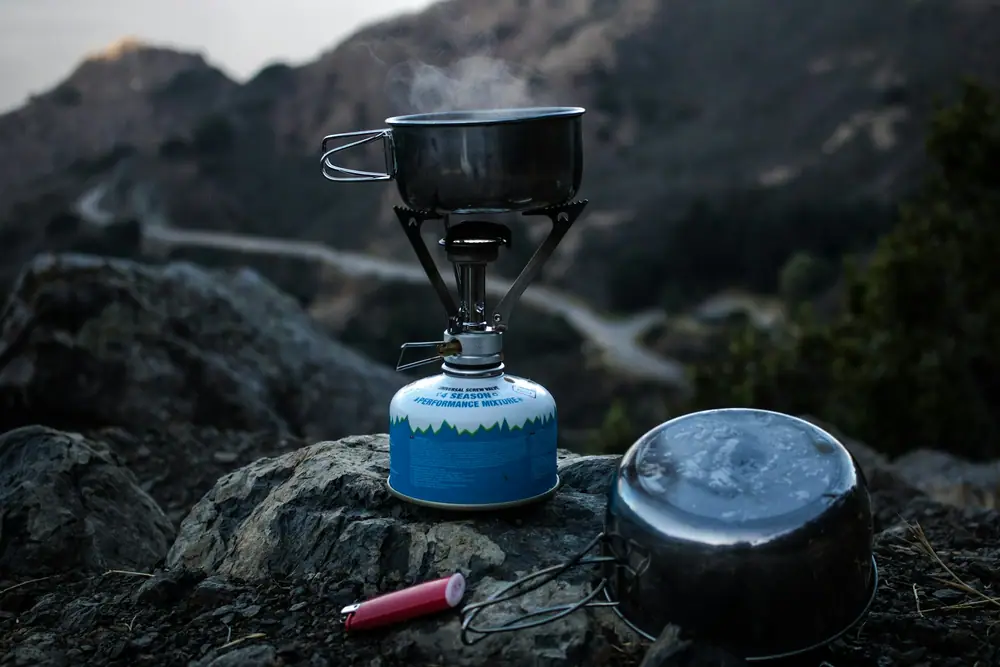
On a camp stove, the challenge is concentrated heat. Small burners create a hot spot directly above the flame, so stir more often than you would at home, and use a heavy pot if you have one — cast iron or thick-bottomed steel spreads heat far better than thin aluminum.
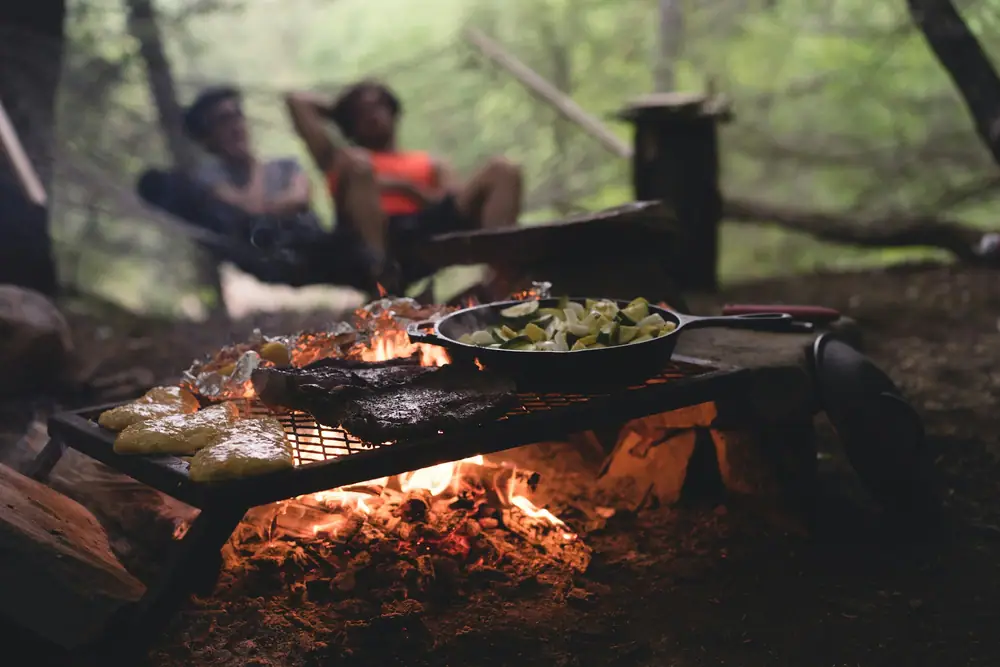
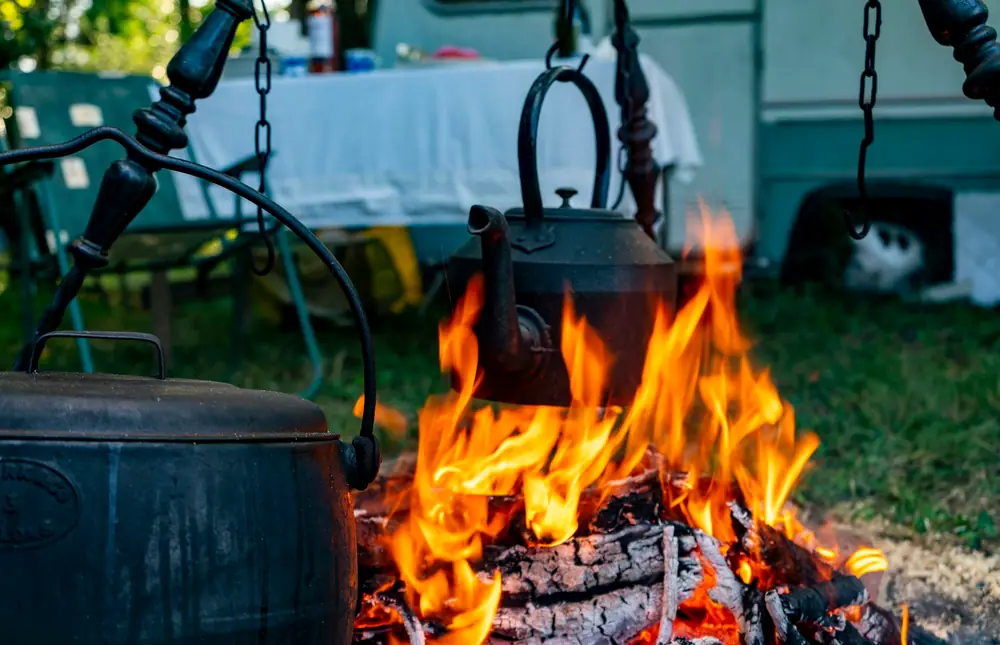
Over a fire, the challenge is the opposite: heat is uneven and changes constantly. Cook over a bed of glowing coals rather than tall flames. Flames blacken pots and scorch food; coals give steady, radiant heat. A good pattern is to build the fire an hour before dinner, let it burn down, then rake coals under one side of the grate. Brown the meat on the hot side, then slide the pot toward the edge to simmer.
Fire safety: Only cook over fire where fires are permitted, keep water nearby, and always check current fire restrictions — they can change during a trip.
Leftovers and variations
Chili is one of the few camp dinners that is better the next day, but leftovers must be cooled and stored properly. Transfer them to a shallow sealed container, let them cool briefly, then put them straight into the cooler at 4°C (40°F) or below. Reheat to steaming hot the next morning for chili-and-egg breakfast burritos, or spoon it over baked potatoes from the coals.
For a vegetarian version, skip the meat and add a third can of beans plus a diced sweet potato with the onions. For a quicker version, cook the whole chili at home, freeze it flat, and simply reheat it at camp — the approach we use for first-night dinners on our 3-day meal plan. Either way, you will end the evening with one pot to wash and a lot more time by the fire.