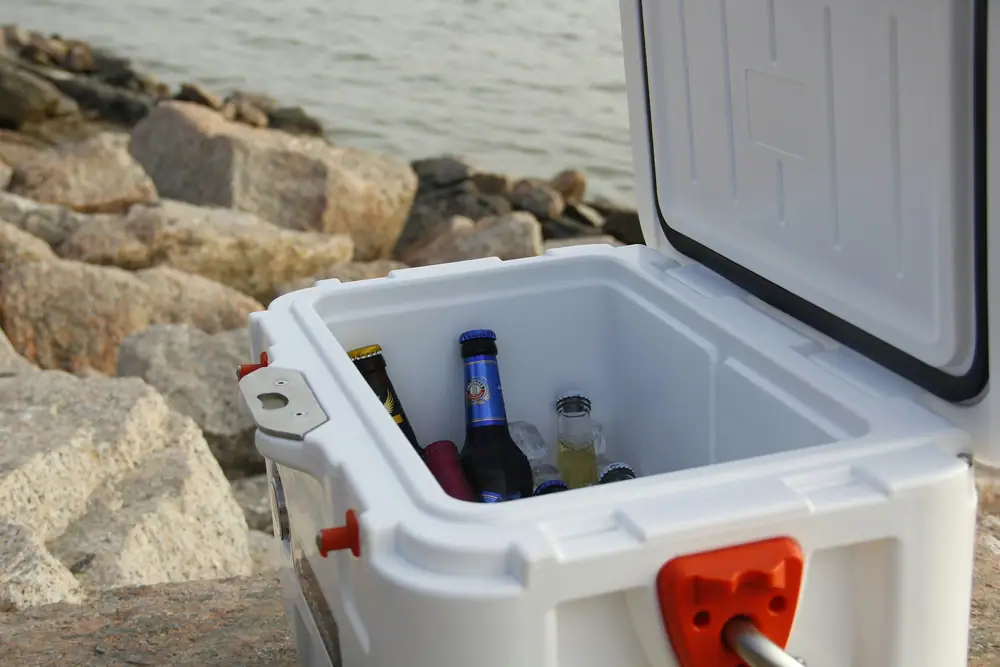
A cooler is the most important food-safety tool on a camping trip, and it only works as well as the way you pack and use it. The good news is that the method is simple and repeatable. Once you have packed a cooler in layers a couple of times, it becomes habit.
The temperature rules
Canadian food safety guidance, like that in many other countries, treats 4°C (40°F) and below as the safe zone for perishable food, and the range between 4°C and 60°C (40–140°F) as the danger zone where bacteria multiply quickly. Perishable food left in that range for more than two hours — or one hour when the air is above 32°C (90°F) — should be discarded. Those numbers drive everything below.
Cook to temperature
- Ground meats: 71°C (160°F)
- Poultry pieces: 74°C (165°F)
- Pork: 71°C (160°F); whole cuts of beef: 63°C (145°F) or more
Bring a thermometer
A small appliance thermometer inside the cooler and an instant-read probe for meat take the guesswork out of both questions: is it cold enough, and is it cooked enough?
Prep at home
Most cooler problems start before the car is loaded. A warm cooler filled with fridge-cold food spends its first several hours of ice just cooling itself down.
The night before
Packing in layers
Think of the cooler as having three floors. Cold air sinks, so the bottom stays coldest. Food you need last goes lowest; food you need first goes on top.
| Layer | What goes here | Why |
|---|---|---|
| Bottom | Block ice or frozen jugs; frozen meat for day 2–3 | Blocks melt slower than cubes; frozen food thaws on schedule |
| Middle | Raw meat in sealed bags; dairy; eggs in a hard container | Coldest shelf for the riskiest food, with drips contained |
| Top | Vegetables, cheese, condiments, first-night food | Easy to reach; less critical if slightly warmer |
| Gaps | Cube ice poured over everything | Air pockets warm up fastest; fill them |
Kitchen note: Tape a simple map of the layers to the lid. It keeps everyone from digging, and a cooler that is opened less stays cold longer.
At camp
Daily cooler routine
That last point is important. A cooler is not bear-resistant unless it is specifically certified, and in many parks food must go in a hard-sided vehicle or a provided locker. See the bear-country storage checklist for details.
Keep or toss?
When the ice runs low, use the thermometer and the clock rather than your nose. Spoiled food often looks and smells normal.
| Food | Above 4°C (40°F) for 2+ hours? |
|---|---|
| Raw meat, poultry, fish | Discard |
| Cooked leftovers, soft cheese, milk, eggs | Discard |
| Hard cheese, butter | Usually fine if not visibly spoiled |
| Whole fruits and raw vegetables | Fine |
| Opened condiments (mustard, ketchup) | Usually fine short-term |
When in doubt, throw it out — and plan tomorrow’s meal around the pantry bin. That is exactly why our 3-day meal plan saves shelf-stable meals for the last day.