Cooking gets the attention, but cleanup is where camp kitchens fall apart. A pile of greasy pans at 9 p.m. is how evenings end badly and how animals get invited into camp. A simple wash station, set up before dinner rather than after, turns cleanup into a ten-minute routine.
Water: how much and how safe
For car camping, plan for at least 4 litres (about a gallon) of water per person per day for drinking and cooking, plus extra for dishes and handwashing. Hot days and physical activity push that number higher. Bring it in jugs if the site has no tap, or confirm in advance that the campground water is potable.
Boil
If you are unsure about a water source, bringing it to a rolling boil for one minute — three minutes at elevations above about 2,000 m (6,500 feet) — is the widely recommended method for making it safe from germs.
Filter or treat
Filters and chemical treatments work well for many situations; follow the product instructions and let cloudy water settle or pre-filter it through a cloth first.
The three-basin station
Three containers are all you need. Set them up in a line at the end of the table furthest from the cooking area.
| Basin | Contents | Purpose |
|---|---|---|
| 1. Wash | Hot water + a few drops of biodegradable soap | Remove food and grease |
| 2. Rinse | Clean hot water | Remove soap |
| 3. Sanitize | Cool water with a small amount of unscented bleach, per label directions for dishes | Kill remaining germs |
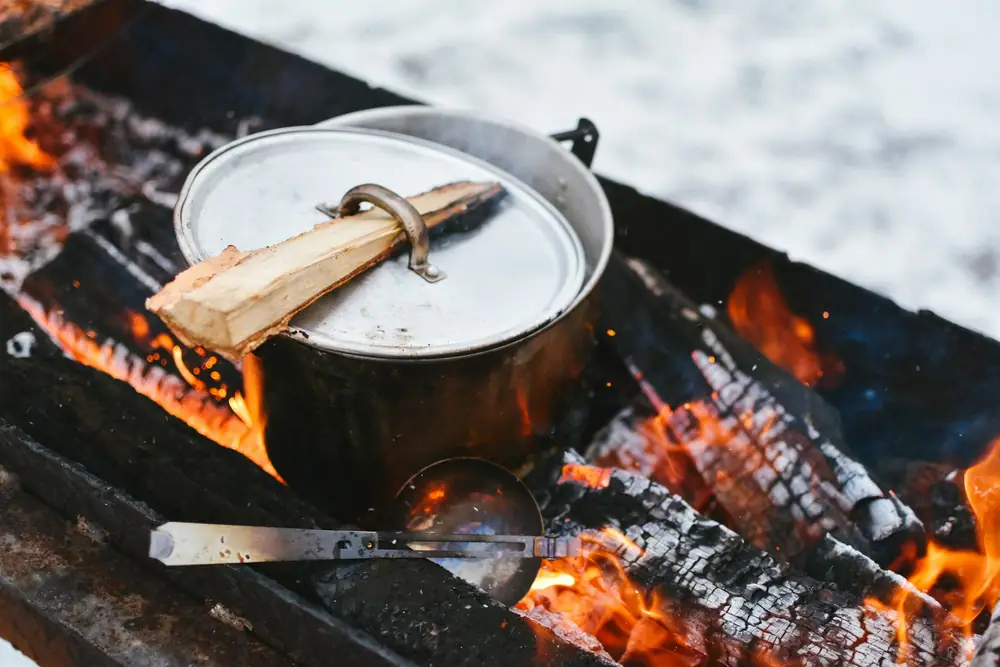
Start heating dishwater while you eat. By the time plates are empty, the pot on the stove is ready, and nobody has to wait around in the dark.
Collapsible basins pack flat into the clean bin, but any three containers will do — a large pot can serve as the wash basin in a pinch. Set the station on a stable surface at a comfortable height; a basin on the ground means a sore back and a lot of splashing. Put a towel under the rinse and sanitize basins so drips do not turn the table into a puddle, and lay a second towel or hang a net bag at the end of the line for drying.
For larger groups, assign the station as a rotating job. One person washes, one rinses and one dries and puts away. With three people, a full dinner’s dishes for eight take around ten minutes, and the cook gets the evening off.
Washing order
Wash in this order
Greywater & scraps
Leave No Trace guidance is consistent: pack out food scraps, strain dishwater, and dispose of it away from water sources. At developed campgrounds, use the designated utility sink or greywater drain if one is provided. In the backcountry, strain out bits and scatter the water broadly at least 60 metres (200 feet, about 70 steps) from lakes and streams.
Scraps belong in your garbage bag, not the fire pit. Half-burned food is one of the most common reasons animals keep visiting a campsite.
Station checklist
Water
Cleanup
When everything is clean and dry, put scented items away according to local rules. In bear country, dishes, soap and even the dish towel count — see our bear-country food storage checklist.