Ask a group of campers whether food tastes better cooked over a fire and you will get a warm, unanimous yes. Ask whether it is easier, and the answers get more honest. Both heat sources have a place in a camp kitchen. The trick is matching each meal to the one that suits it, rather than forcing every dish over flames or every dish onto a burner.
Where the stove wins
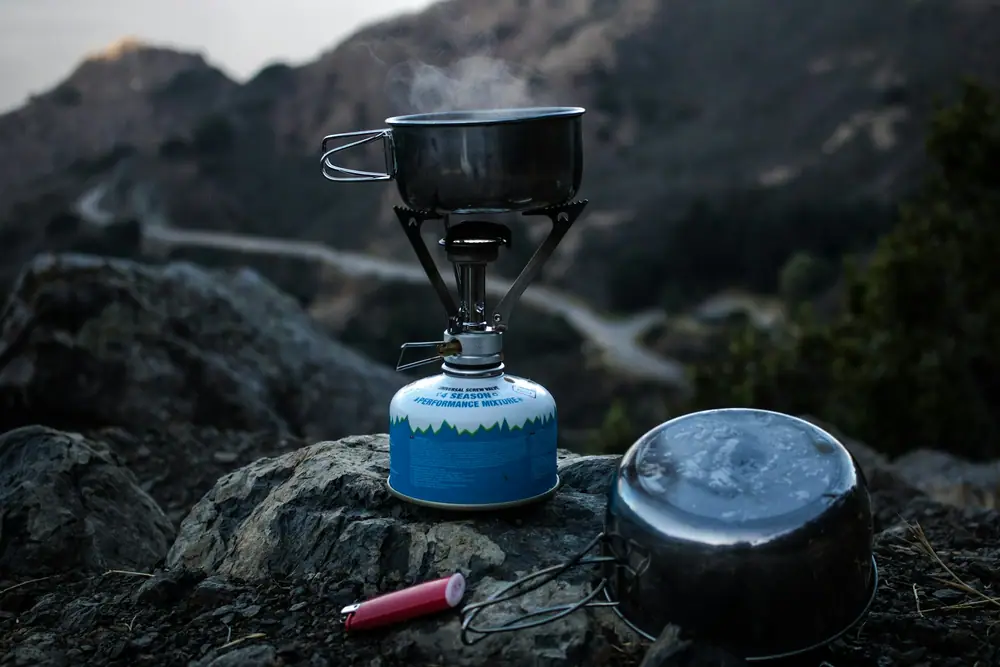
A camp stove is controllable, immediate and predictable. You turn a knob and get heat in seconds; you turn it down and the pot stops boiling. That makes it the clear choice for anything that needs precise temperature or speed.
- Breakfast. Nobody wants to build a fire before coffee. Eggs, pancakes and oatmeal all cook quickly and evenly on a stove.
- Boiling water. Pasta, rice, dishwater and hot drinks are much faster over a focused burner.
- Delicate foods. Sauces, eggs, fish and anything that scorches easily.
- Bad weather. Rain, wind and wet wood make fires slow; a stove behind a windscreen just works.
Where the fire wins
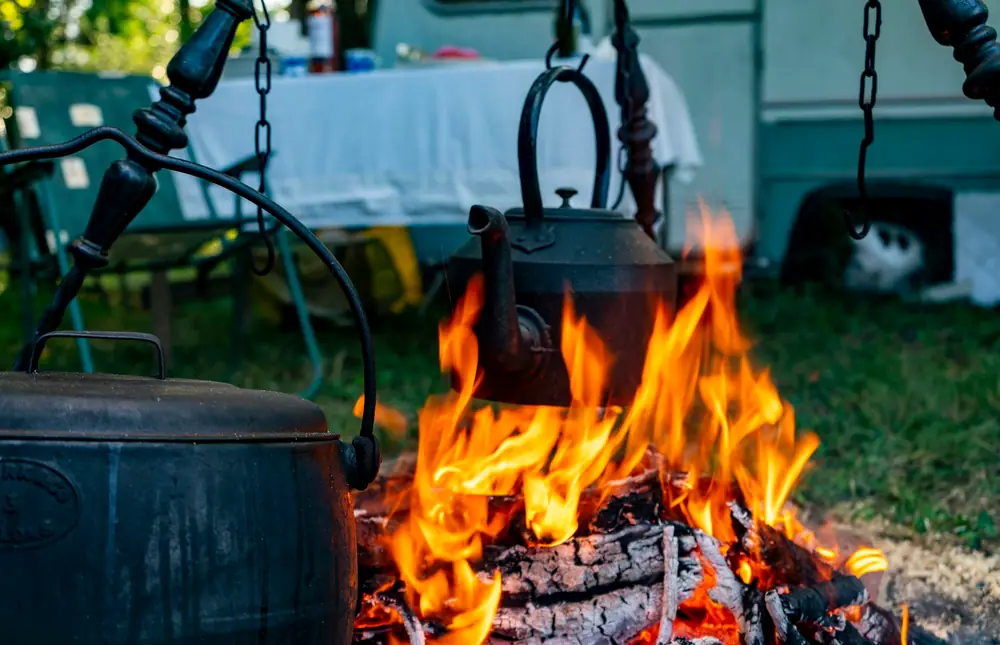
A campfire is slower to start and harder to control, but it offers a wide, radiant heat that is ideal for certain foods — and, of course, it is the social centre of camp.
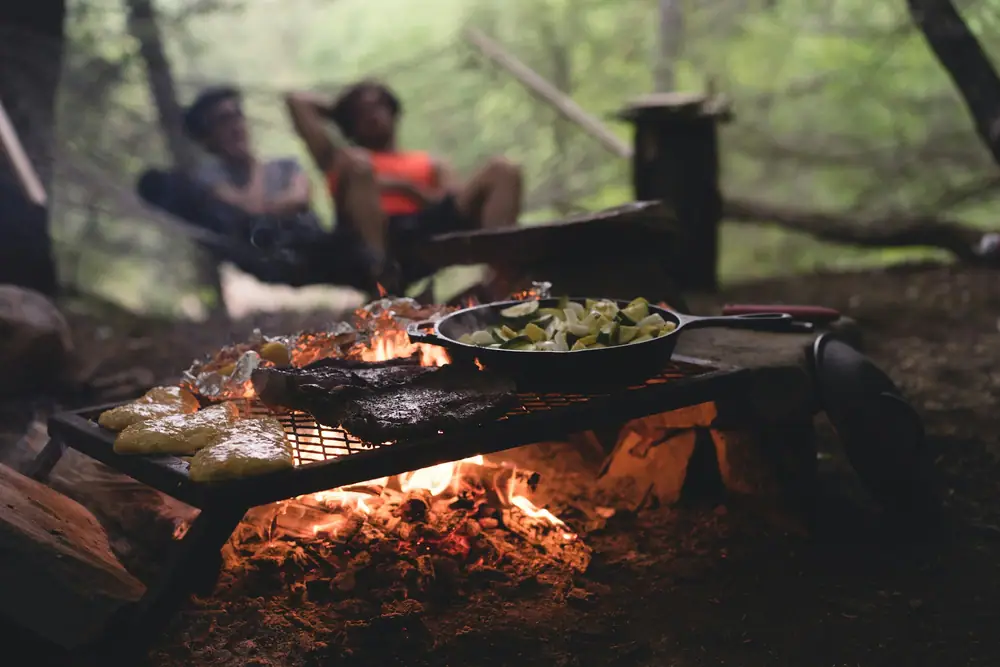
- Foil packets and roasted vegetables. Coals give steady heat all around the packet. Our foil-packet method is built around it.
- Grilling. Sausages, burgers, skewers and corn benefit from smoke and char.
- Dutch oven cooking. Coals on the lid and below turn a Dutch oven into a real oven for cobblers, bread and stews.
- Long, slow simmering. A pot of chili or beans can sit at the edge of the coals for an hour.
Use the stove for speed and control; use the fire for flavour and company.
Side by side
| Camp stove | Campfire | |
|---|---|---|
| Time to heat | Seconds | 45–60 min to good coals |
| Control | Precise | Approximate — move food, not flame |
| Best for | Breakfast, boiling, sauces | Foil packets, grilling, Dutch oven |
| Weather | Works in wind with a screen | Struggles in rain and wind |
| Restrictions | Usually allowed during fire bans (check) | Often banned in dry seasons |
| Cleanup | Wipe down | Soot on pots; drown and stir ashes |
Planning a menu around both
A reliable pattern is stove mornings, fire evenings. Breakfast and lunch go on the stove, while dinner is planned for the fire, with the stove as backup. We also mark every dinner on the menu with its heat source and a fallback. For example: “Foil packets — coals (backup: skillet on stove, 20 min).” That single line removes the stress if the wood is wet or a burn ban goes into effect.
Some meals use both heat sources in sequence, and these are often the most satisfying. Boil corn or par-cook potatoes on the stove, then finish them on the grate for colour and smoke. Simmer a pot of beans on a burner while sausages grill over the coals. Brown meat in a skillet on the stove, then move it into a Dutch oven on the coals for a slow braise. Thinking of the stove and the fire as two stations in one kitchen, rather than rivals, opens up far more options than either offers alone.
Fuel planning follows from the menu. For stove cooking, a common rule of thumb is to bring more fuel than you think you need — cold weather, wind and long simmers all use more than expected. For fire cooking, buy or gather firewood locally where permitted, since moving firewood can spread forest pests, and many areas restrict it.
Timing is the other half. A fire needs about an hour to burn down to cooking coals, so light it when you start prepping, not when you are hungry. While it burns down, use the stove to boil water for dishwater and get sides started. By the time the coals are ready, dinner comes together quickly.
Carbon monoxide: Never run a stove, grill or heater inside a tent, camper or other enclosed space. Cook in the open air.
When fires are banned
In dry seasons, many areas restrict or prohibit campfires — provincial fire bans can cover whole regions — and some restrictions also cover charcoal. Check with the land manager before you leave and again when you arrive. Any meal on this site can be adapted to a stove: foil packets become skillet hash, grilled sausages become pan-seared, and campfire apples can bake in a covered pot over low heat. Our 3-day meal plan was written so every meal works on a two-burner stove alone.
The fire is part of the experience, but it does not have to carry the whole kitchen. A good stove, a flexible plan and a little respect for the rules will feed everyone well, whatever the conditions.