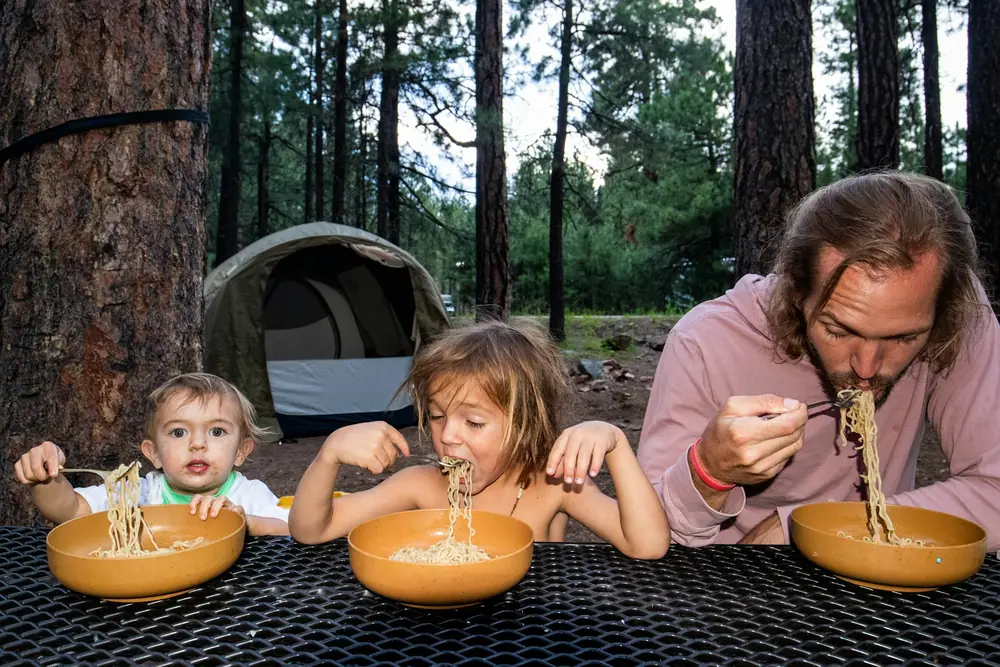
Camping with kids changes the kitchen. Appetites arrive suddenly, attention spans are short, and there is a lot of excitement in the air. The good news is that a few structural choices — not complicated recipes — make camp meals with children calmer and more fun for everyone.
Familiar beats fancy
A new place is already a lot of novelty. Most children eat better at camp when the food is recognizable: pasta, tacos, pancakes, sandwiches, fruit. That does not mean the food must be dull. It means the adventure comes from cooking and eating outdoors, not from unfamiliar ingredients. Save the experimental dishes for a trip when the kids are older, or offer them alongside a familiar option.
It also helps to include one “camp tradition” food that only appears on trips — a particular breakfast, a campfire dessert, cocoa at bedtime. Those small rituals are what children remember, and they give a trip a rhythm.
Build-your-own meals
The single most useful format for family camp meals is the build-your-own table. Set out components in bowls and let everyone assemble their own plate. Picky eaters choose what they like, adventurous eaters pile on more, and the cook does not have to take individual orders.
- Taco or burrito bar: seasoned meat or beans, tortillas, cheese, lettuce, salsa.
- Pasta bar: plain pasta, a jar of sauce, butter and parmesan, peas.
- Pancake bar: plain pancakes with fruit, yogurt, syrup and nut butter.
- Foil-packet bar: kids choose fillings for their own packet, labelled with a marker. See our foil-packet method.
When children build their own plate, they usually eat more of it.
Campfire Quesadillas
- Serves 4
- Prep 5 min
- Cook 10 min
- Skillet on stove or grate
Ingredients
- 8 flour tortillas
- 200 g (2 cups) shredded cheese
- 1 can (540 mL / 19 oz) black beans, drained
- 250 mL (1 cup) cooked chicken or leftover chili (optional)
- Butter or oil for the pan
- Salsa and sour cream to serve
Method
- Let kids lay out 4 tortillas and sprinkle cheese, beans and any extras on each. Top with the remaining tortillas.
- Heat a lightly buttered skillet over medium heat.
- An adult cooks each quesadilla 2–3 minutes per side, pressing with a spatula, until golden and the cheese melts.
- Cut into wedges on a board and serve with salsa.
A snack system
Hungry kids open the cooler constantly, which warms it up and lets food spoil faster. The fix is a snack system. Before the trip, pack a daily snack bag for each child — crackers, fruit, trail mix, a granola bar — labelled with their name and the day. Keep cold snacks such as cheese sticks and yogurt tubes in a small separate cooler that can be opened freely, so the main food cooler stays shut. Our cooler guide explains why that is important.
Kitchen jobs by age
Children who help cook are more invested in eating. Give each one a real job suited to their age.
Younger kids
- Wash fruit and vegetables
- Set the table and hand out cups
- Tear lettuce, sprinkle cheese
- Collect small sticks (if allowed)
Older kids
- Measure pancake mix
- Assemble foil packets
- Stir a pot with supervision
- Run the dishwashing station
Safety zone
Stoves and fires are the main hazards in any camp kitchen. Set a simple rule on arrival: an imaginary circle around the stove and the fire ring that children only enter with an adult. Keep pot handles turned inward, use a stable table for the stove, and let hot pans cool out of reach. Teach children to walk, not run, near the fire, and keep a bucket of water nearby.
Food safety deserves a word here too, because children are more vulnerable to foodborne illness. Keep a handwashing station — a jug with a spigot, soap and a towel — right next to the table, and make washing hands before meals a camp rule, just as it is at home. Hand sanitizer is a useful backup but does not work well on visibly dirty hands, which, at camp, is most hands. Keep raw meat well away from snack foods, and do not let children eat directly from shared bags where many hands have been.
Timing is the last piece. Kids get hungry earlier than adults tend to cook at camp, especially after a day outdoors. Plan dinner for early evening, and put out a pre-dinner snack plate — cut vegetables, crackers, cheese — while the meal cooks. A hungry, tired child and a cook in a hurry are the most common recipe for a difficult evening; a plate of carrots at five o’clock prevents a surprising amount of it.
Finally, keep your own expectations realistic. Some meals will be half-eaten, and somebody will spill cocoa. That is part of it. A relaxed cook with a simple plan will do more for family camping than any perfect recipe.