Mornings at camp have a particular quality. The air is cool, the site is quiet and there is nowhere urgent to be. A good breakfast routine protects that feeling. The goal is not an elaborate meal — it is a sequence that gets hot drinks into hands quickly and then produces something filling without a pile of dishes.
The morning sequence
Most of the stress in a camp morning comes from everyone wanting something at once. A fixed order solves it.
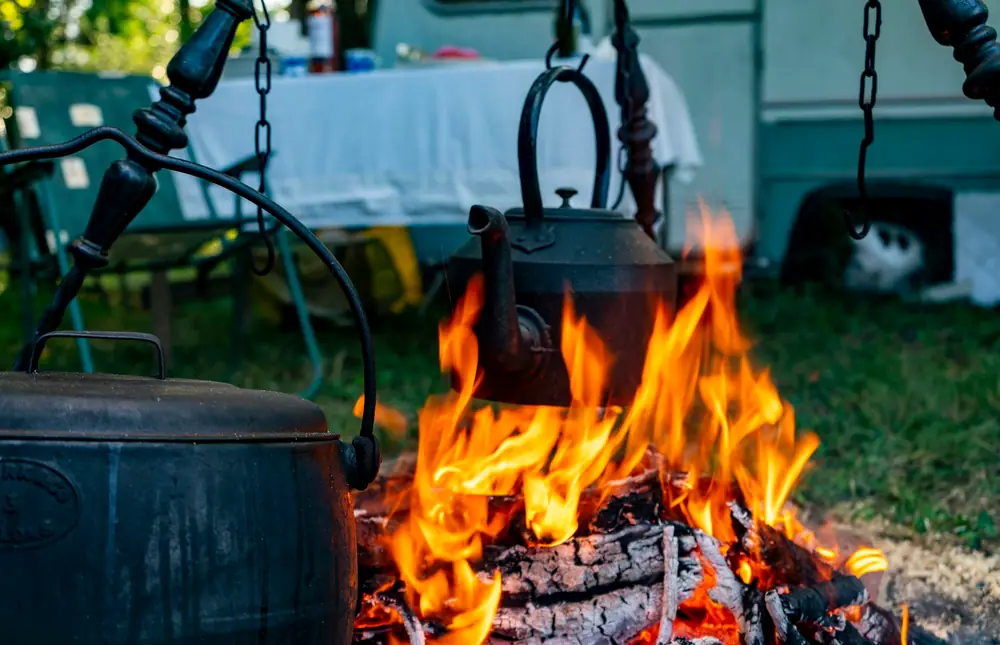
- Water on first. Before anything else, fill the kettle and light the stove. This one pot of hot water will serve coffee, tea, cocoa and oatmeal.
- Hot drinks second. While breakfast is prepared, everyone has something warm to hold.
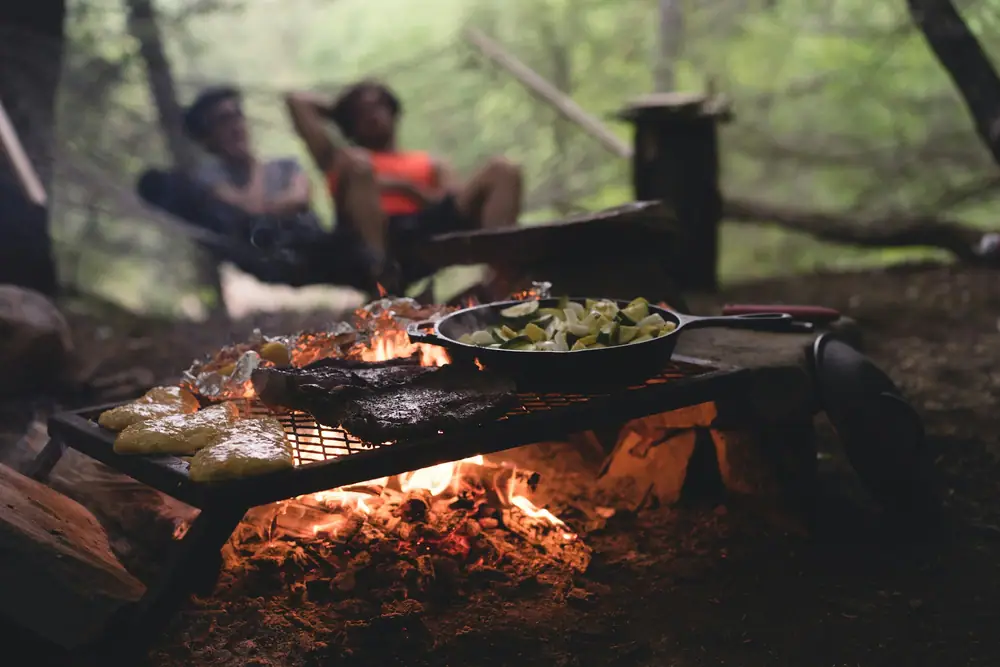
- Skillet third. Once the kettle is off, the burner goes to the skillet for the main breakfast.
- Dishwater last. Refill the kettle and heat dishwater while you eat, so cleanup is ready when plates are empty.
One kettle of water, set on before anyone asks, is the quiet secret of a calm camp morning.
Coffee options
Everyone has a preference, and every method works at camp. What changes is weight, cleanup and how many people you are serving.
| Method | Good for | Cleanup |
|---|---|---|
| Pour-over cone | 1–2 cups, lightweight | Pack out filter and grounds |
| French press | Several cups at once | Grounds need straining and packing out |
| Stovetop espresso pot | Strong small cups, durable | Knock out puck into garbage |
| Percolator | Groups, classic camp style | Basket empties into garbage |
| Instant | Speed, backpacking | None |
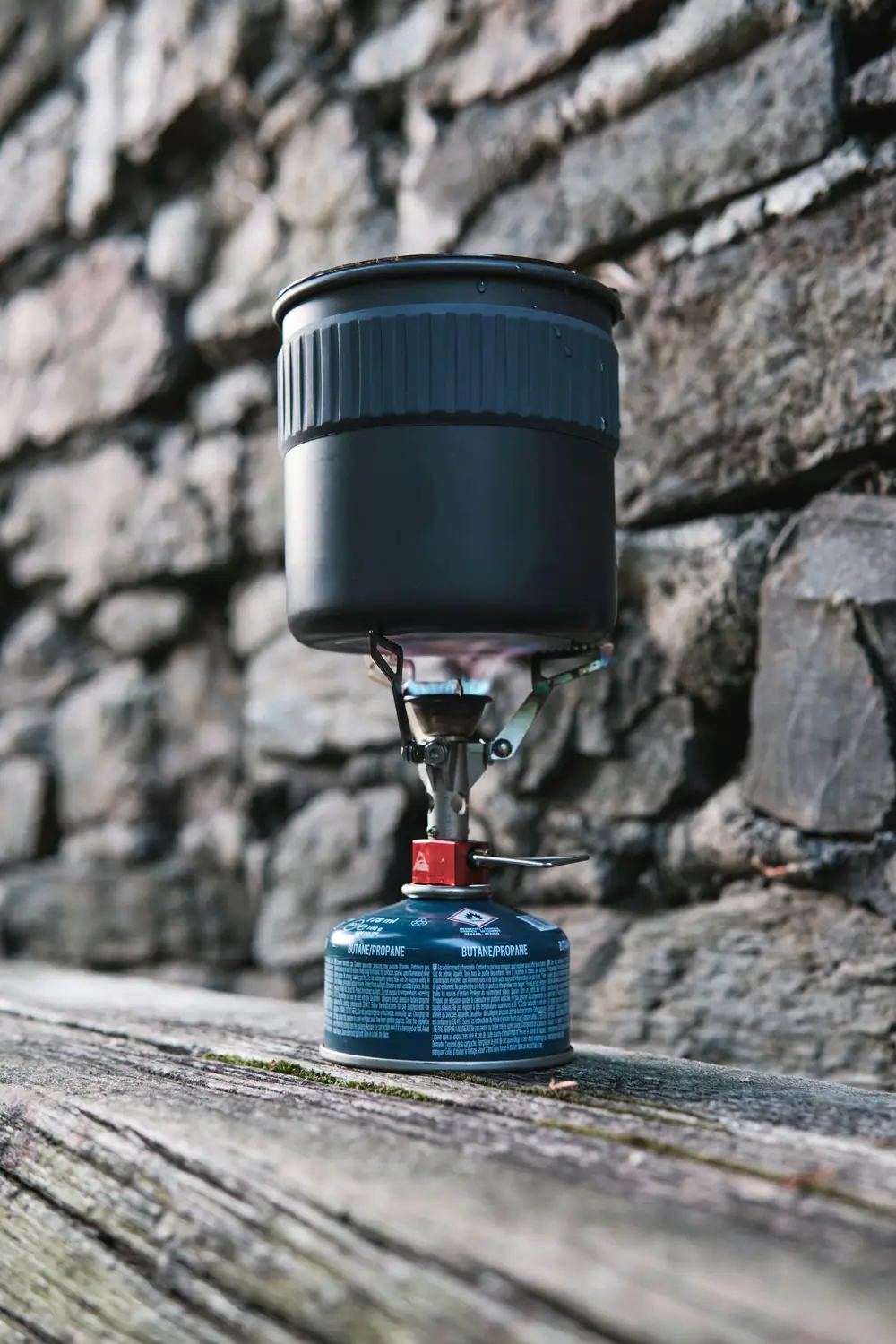
Cold mornings deserve a thought too. Gas canisters lose pressure in the cold, so a stove that roars at noon may sputter at dawn. Keep the canister in the car or tent vestibule overnight rather than on the cold table, and use a windscreen to keep what heat you have focused on the kettle. A lid on the kettle brings water to a boil noticeably faster and saves fuel on every trip.
For groups, a large insulated flask is a small luxury that pays for itself. Brew one big batch, pour it into the flask, and the stove is immediately free for breakfast. Late risers still get hot coffee, and nobody has to relight a burner for a second round.
Whatever the method, pre-grind and portion coffee at home, one bag per morning. It saves measuring in the dark and makes the supply easy to track. Coffee grounds count as food waste: pack them out rather than scattering them.
Camp skillet hash
This hash is designed for the second or third morning of a trip, when there are leftover potatoes, sausage or vegetables from a foil-packet dinner. It also works from scratch with par-boiled potatoes from home.
Leftover Camp Skillet Hash
- Serves 4
- Prep 5 min
- Cook 20 min
- Skillet on stove
Ingredients
- 750 mL (3 cups) cooked potatoes, cubed (leftover or par-boiled)
- 250–500 mL (1–2 cups) cooked sausage, bacon or leftover vegetables
- ½ onion and ½ bell pepper, diced
- 30 mL (2 tbsp) oil or butter
- 4–6 eggs
- Salt, pepper and a pinch of paprika
- Hot sauce and tortillas to serve (optional)
Method
- Heat oil in a large skillet over medium-high heat. Add potatoes in a single layer and leave them undisturbed for 4–5 minutes to brown.
- Turn the potatoes, add onion and pepper, and cook 5 minutes more, stirring occasionally.
- Add sausage or leftovers and cook until heated through and steaming, 3–4 minutes. Season.
- Make 4–6 hollows in the hash, crack an egg into each, cover with a lid or foil, and cook on low heat until the eggs are set, 5–7 minutes.
- Serve straight from the skillet, with hot sauce or wrapped in tortillas.
Leftover safety: Only use leftovers that went into the cooler promptly after dinner and stayed at 4°C (40°F) or below. Reheat them until steaming hot throughout.
No-cook mornings
Some mornings are for leaving early — a sunrise hike, a long drive home, an early paddle. For those, plan a no-cook breakfast: overnight oats made the night before in jars, yogurt with granola, bagels with nut butter, or hard-boiled eggs prepped at home. Keep the kettle routine for hot drinks and you still get the best part of a camp morning.
If you are building a full trip menu, our 3-day meal plan shows how breakfasts can share ingredients with the rest of the week, so nothing in the cooler goes unused.